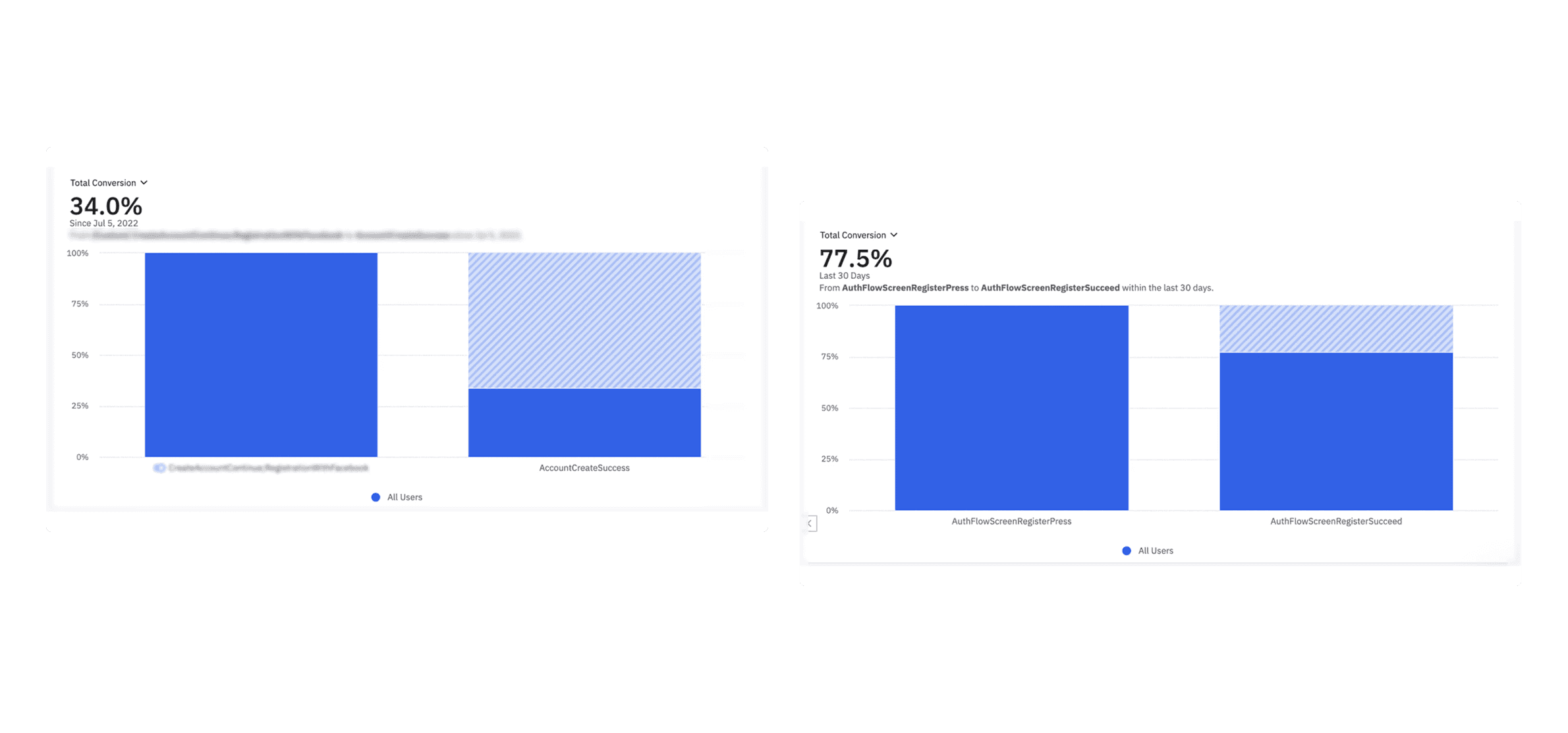
Taking conversion from 34% to 77%
How I used UX research and behavioral data to find and fix a heavy drop-off.
Case Study
Palderio Creative Labs
The Problem
I was the UX/UI Designer on this project, in charge of user research, experience, developing the UI identity & assets, and planning next steps and roadmap, working directly with two stakeholders and a small team of two Unity developers and one 2D artist.
While checking general metrics, I noticed there were way more people downloading the app than users starting to play. Keeping in mind that this game could only be played after registration, for safety reasons related to the target players (teens and pre-teens), I formed a hypothesis: users are signing up but not reaching gameplay due to friction or barriers in the registration flow.
To test that, I used a quantitative and qualitative approach:
I measured user taps and drop-offs across the entire sign-up to play flow, using Amplitude to track each step in both the Email and Facebook registration flows.
I interviewed 4 users to learn more about their experience.
What I found out
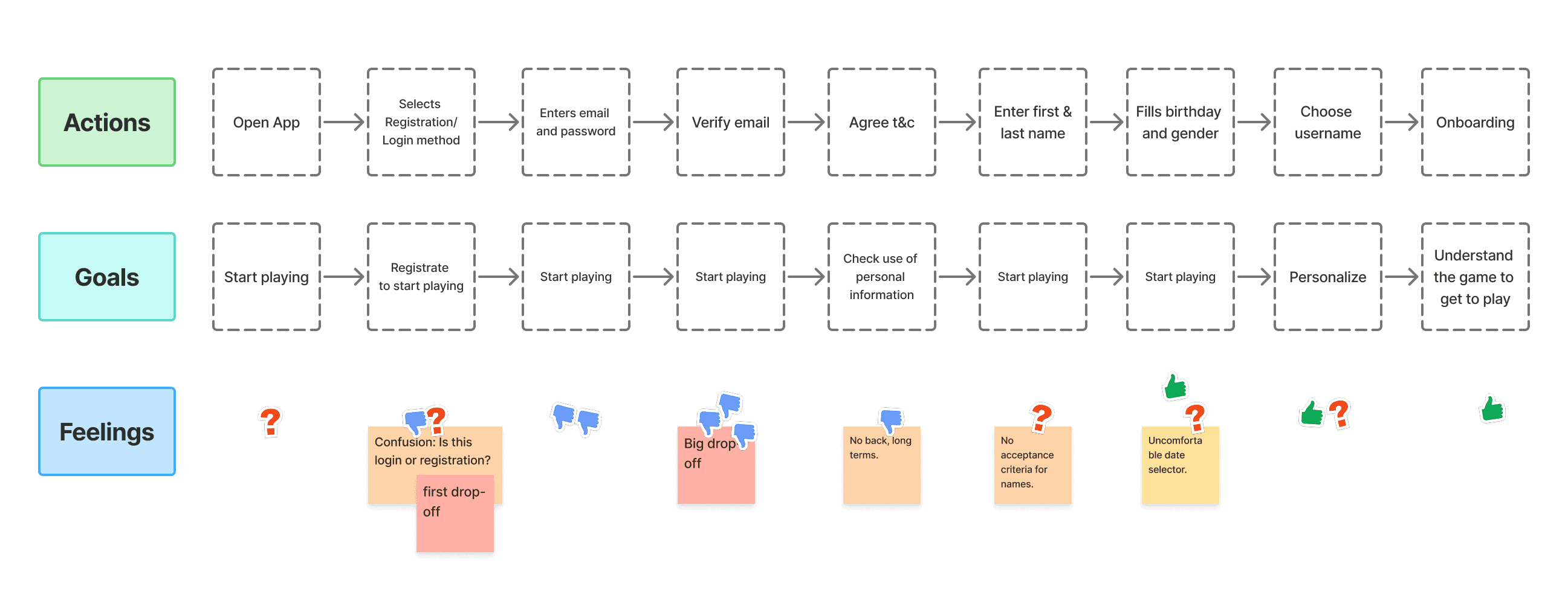
Options available for registration where only Email or Facebook.
Email was the most popular registration method, and it also had the highest dropout rate, specifically at the email verification screen. It was acting as a barrier. Users were forced to leave the app to confirm their email without even trying the game.
Registration with Facebook, was chosen by 21.6% of users, but with a success rate of 67.5%, which was much higher than email.
My main discoveries from User Interviews were:
The registration process was perceived as too long.
Users expected to be able to log in with a Google or Apple accounts.
The Solution
After ideating and leading some workshops and discussions with the team, I landed on a design solution:
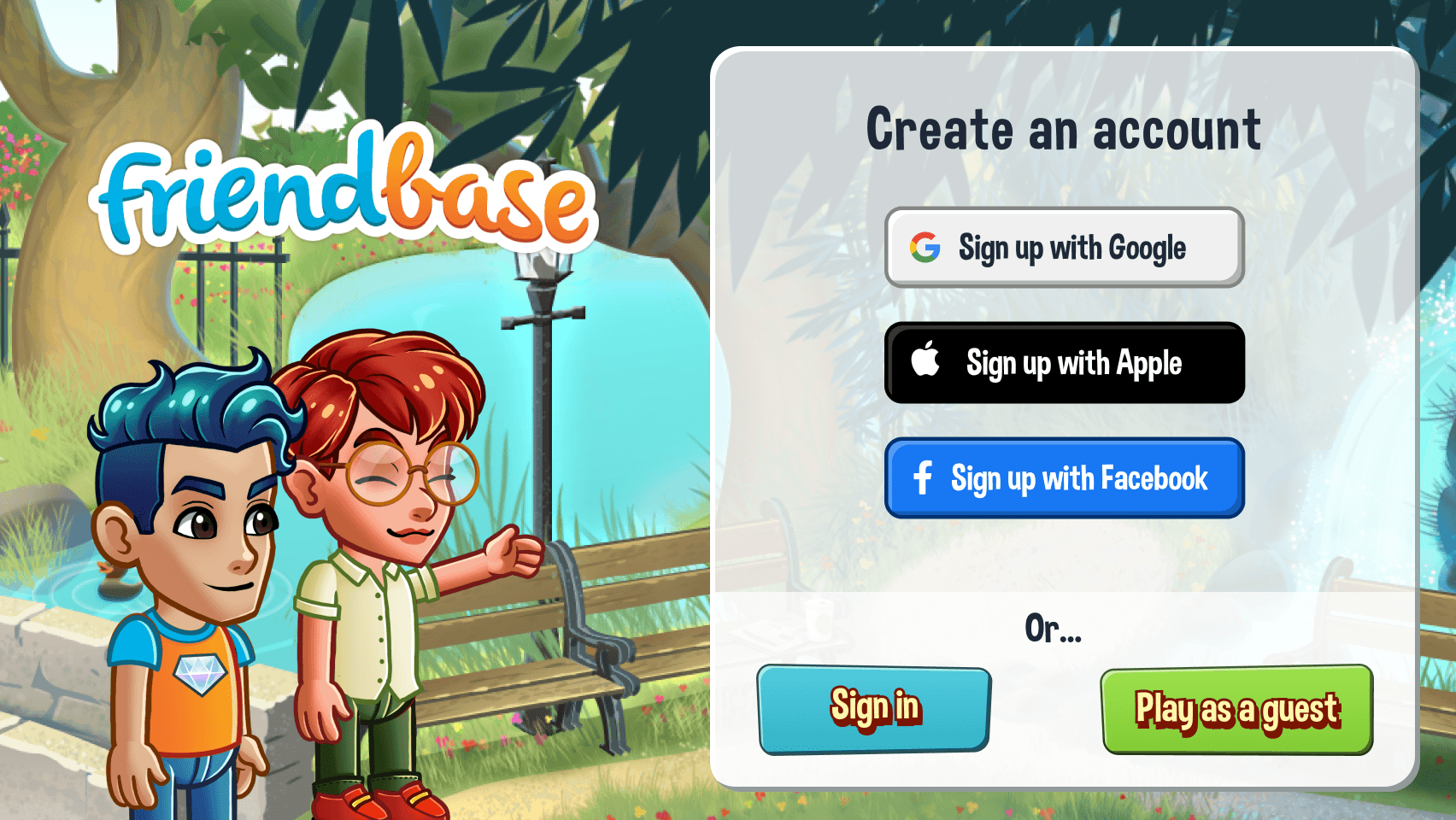
Google and Apple SSO: A trustworthy, expected and quicker way to register.
Reducing Registration Steps: After conversations with stakeholders and marketing, I was able to streamline the process from 9 to 4 total steps.
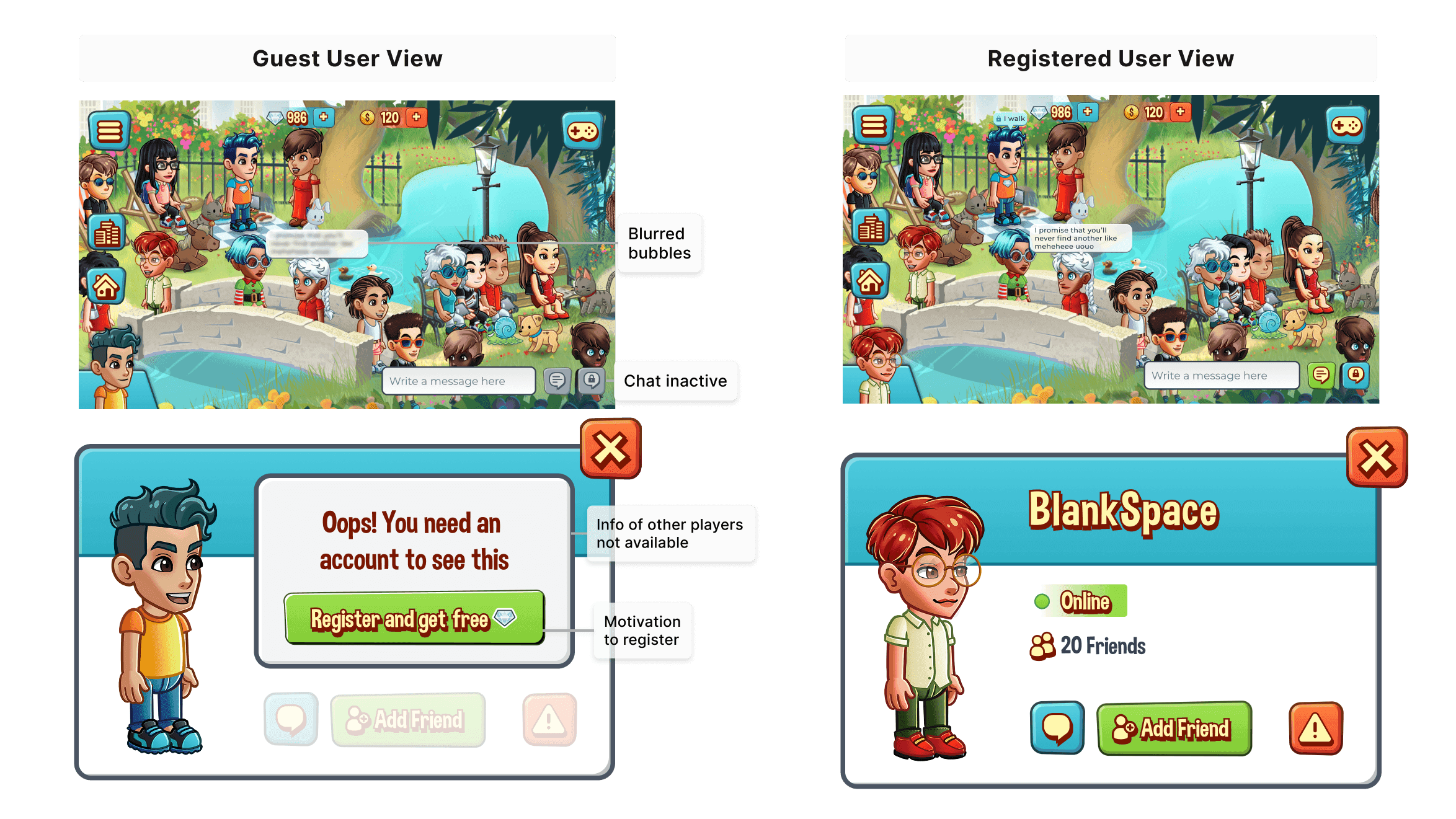
Play as a guest: Introduced a way to try the game before registration.
Chatting, adding friends or seeing player details were not available for guests, for safety reasons.
To encourage registration, we offered extra coins to guest users who signed up, providing some extrinsic motivation to complement the intrinsic motivation of not wanting to lose the progress they had made personalizing their avatar and home.
Results
Once the solution was in production, the sign-up-to-play conversion rate increased from 34% to 77.5% during the first 30 days. Numbers remained stable over the long term. I also added multiple measurement points to track drop-off screens and continued evaluating the new solution over time.