How I took signup rate from 34% to 77.5%
2021 | Friendbase | Mobile Videogame
Introduction
Friendbase is a 2D social virtual world that gained traction on Facebook during the rise of Facebook games and was later adapted into a mobile app for iOS and Android. I joined the team as their first UX/UI Designer and worked on redesigning and creating multiple flows, as well as new game dynamics.
In this case study, I’ll walk through how, using research and iteration as core UX tools, I improved the sign up rate from 34% to 77.5%.
Problem
When I started working with the team, there weren’t many metrics available. However, with the data we did have, I quickly noticed a disproportionate relationship between downloads and successful registrations. Many more users were downloading the app than actually making it through to the game.
Downloads
Create Account w/
email or Facebook
Create Avatar
Start Playing
Hypothesis
Users are signing up but not reaching gameplay due to friction or barriers in the registration flow.
"Martin's ability to see the big picture and foresee our needs as a client makes him an invaluable designer."

Melika Sanati
Friendbase Co-founder
Quantitative Data
We had a hypothesis, so it was time to test it. I measured user actions across the entire sign-up to play path, using Amplitude to track each step in both the Email and Facebook registration flows.
Highest dropout rate
Email was the most popular registration method among our users, and it also had the highest dropout rate, specifically at the email verification screen. I examined that screen and realized that it acted as a barrier. Users couldn’t do anything further within the app; they were forced to leave and confirm their email without even trying the app.
5754 users
1192 users
Verified the email
639 users
Start Playing
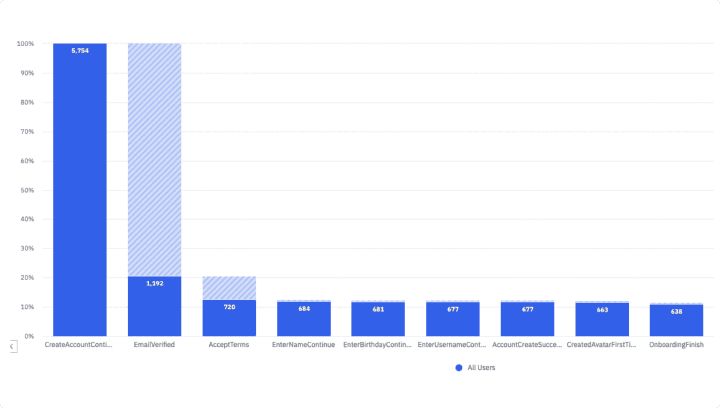
Email Registration Funnel Analysis Chart, Amplitude.
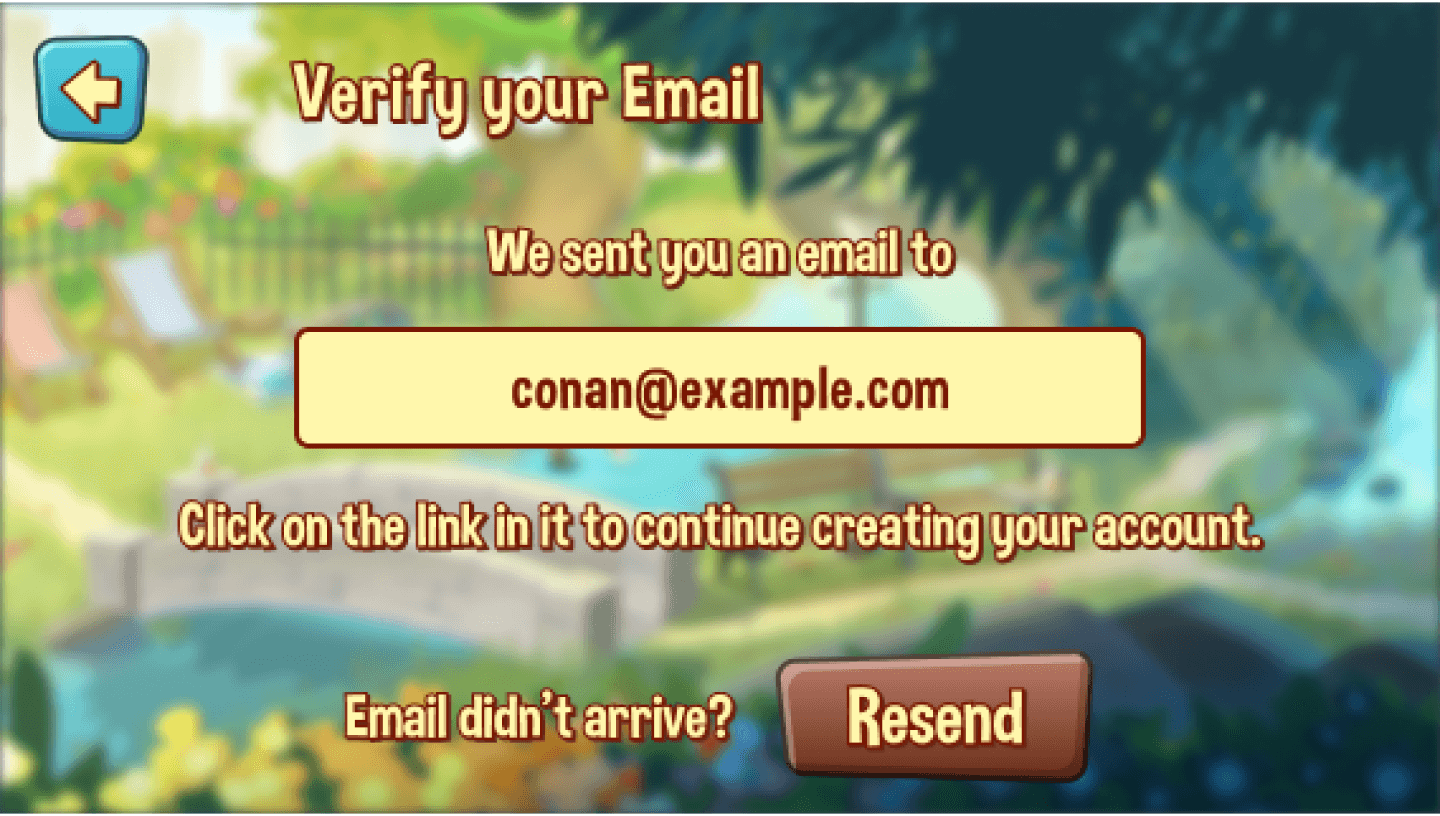
Verification Screen. Worst drop-off.
The other option was registration using a Facebook account, chosen by only 21.6% of users, but with a success rate of 67.5%, which is much higher than email.
Qualitative Data
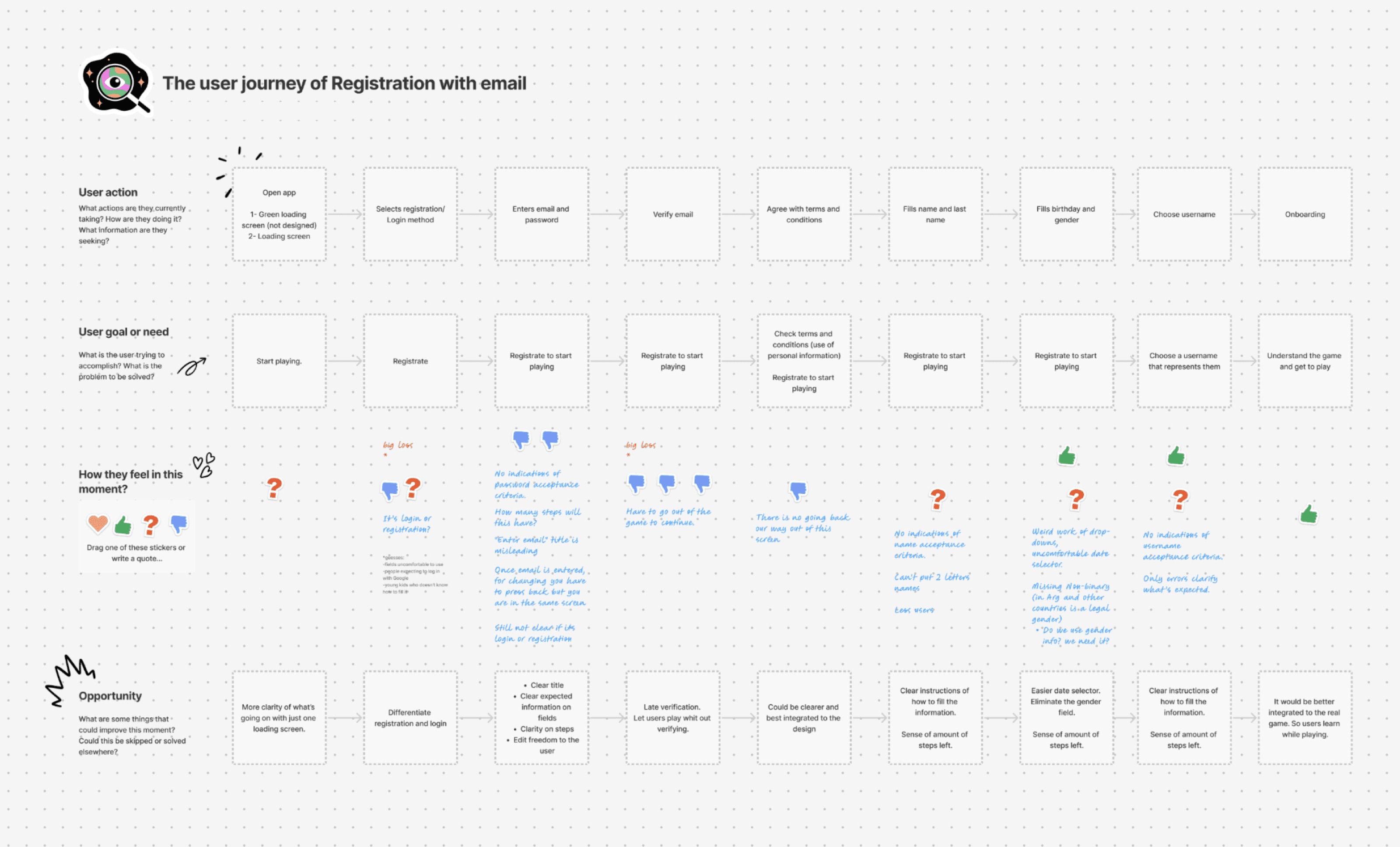
I was able to interview 4 collaborative users. The main discoveries from this sessions were:
The first screen did not clearly differentiate between 'Login' and 'Sign In,' causing confusion.
Users expected to be able to log in with a Google or Apple Account.
There were no clear acceptance criteria for usernames or names.
To summarize and visually present both quantitative and qualitative data, I created a User Journey Map for both registration processes: Email and Facebook. I shared this with stakeholders and the team to ensure everyone was aligned and foster collaborative ideation.
Solution Proposal
After researching, ideating, leading some workshops, and having a few meetings, I landed on a design solution that I'll explain through its three main features: SSO, Play as a Guest, and reduced steps.
Google and Apple Single Sign-On
Adding Google and Apple accounts was something users were loudly asking for. It's a trustworthy and quicker way to register, and also a standard in the industry.
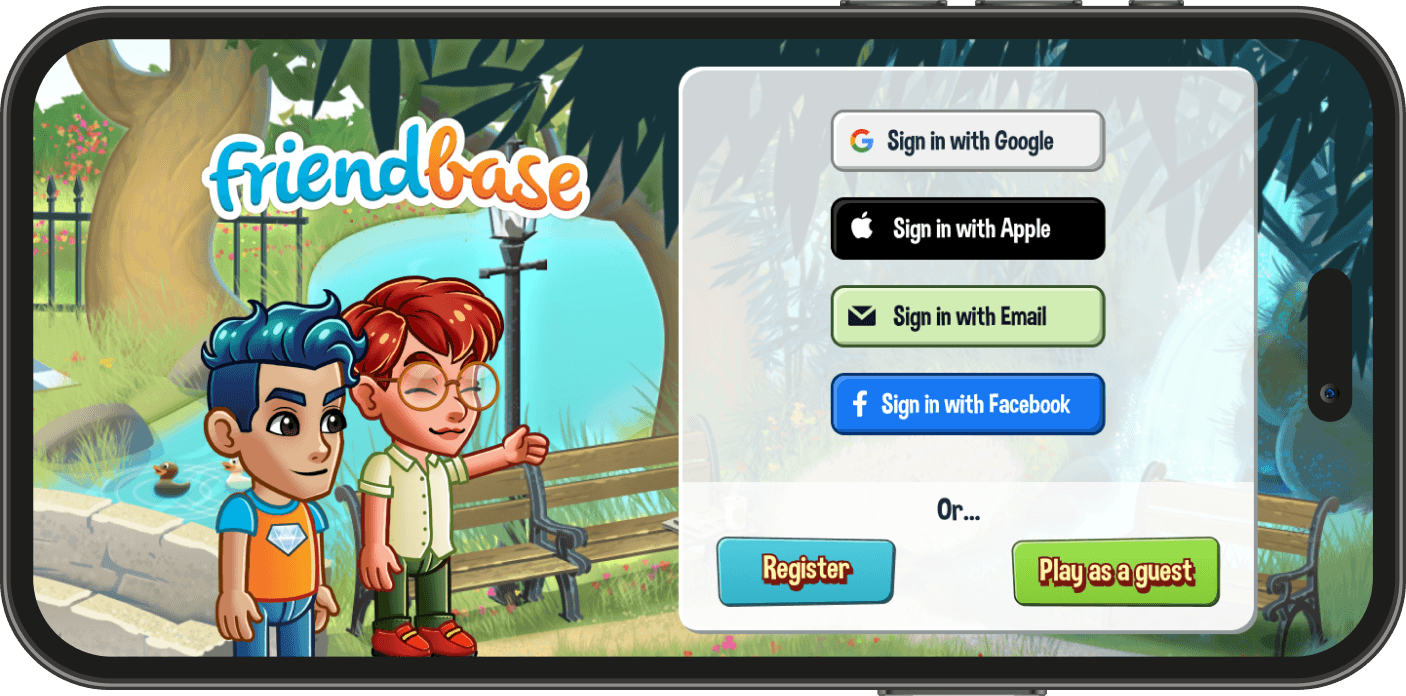
Play as a guest
Introducing a new way to try the game before creating an account. Guest users can explore the game, but they cannot chat or make friends. This measure ensures security for our users. To encourage registration, we offer coins to Guest users who sign up, providing some extrinsic motivation, to complement the intrinsic motivation of not wanting to lose their progress.
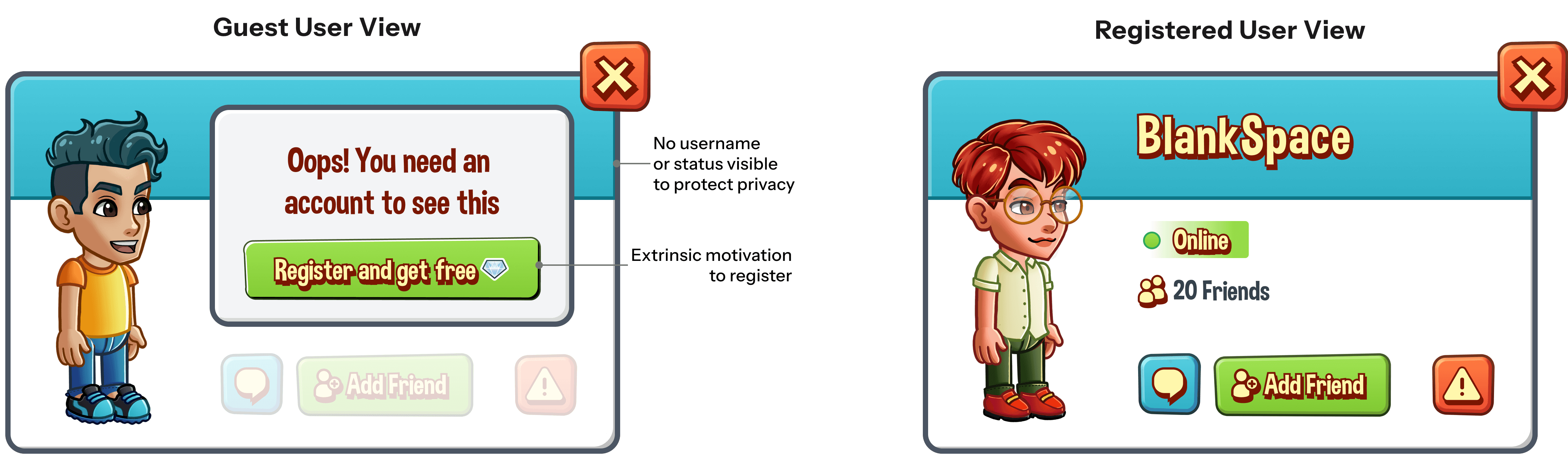
Players profile cards for Guest vs Registered users.

Chat access and interaction for Guest vs Registered users.
Reducing Registration: From 9 steps to 4.
With Single Sign-On and Play as a Guest options, we brought users closer to their (and our) goal: to start playing. However, the original flow required users to navigate nine steps to complete their account setup. Some of these steps involved sharing personal data, which created friction and discomfort.


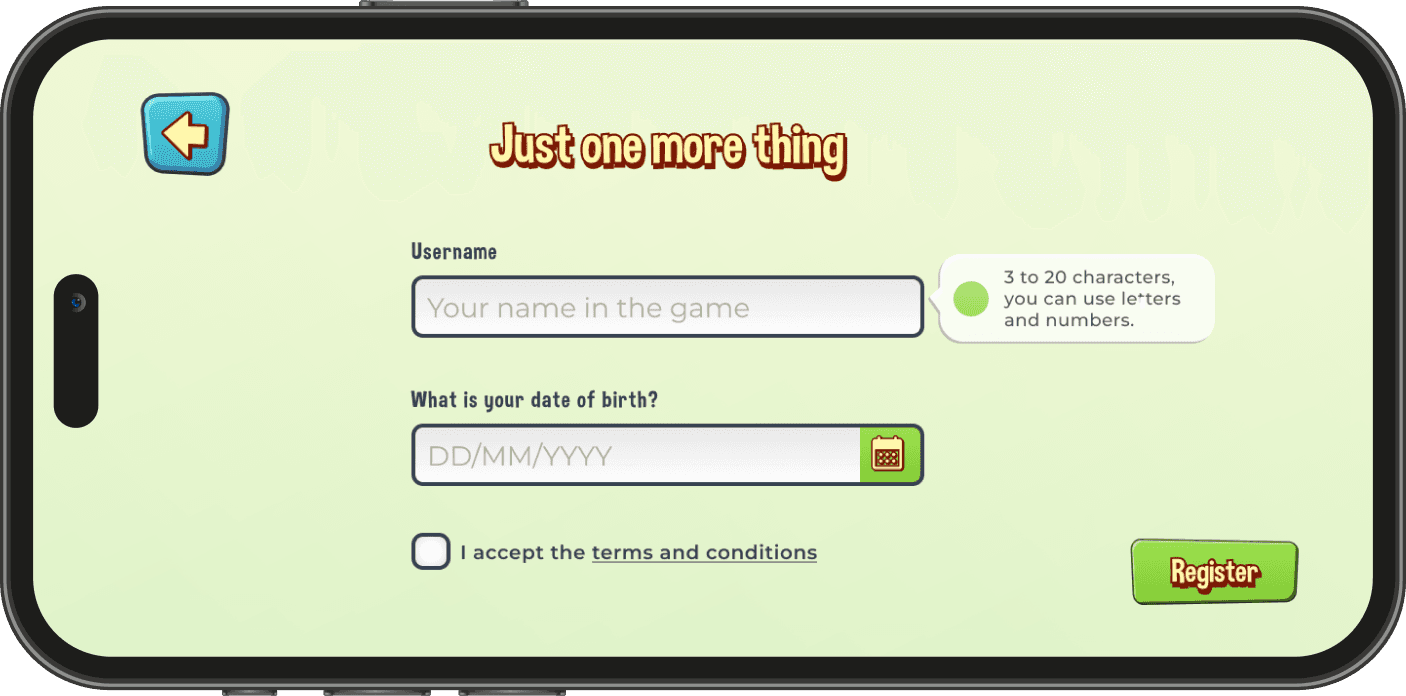
After extensive discussions, research, and debates with stakeholders and marketing teams, I streamlined the process to four steps: Sign in, Create Account, Username and Birthday, and Create Avatar.
I consolidated the core registration into just one screen with two fields (Username and Birthday) and one checkbox for accepting the terms and conditions. Without compromising the characteristic and playful style of the game, I developed a more minimalistic design that helps users focus on their goal: to register quickly and start playing.
"As a developer, it always really easy to work with Martin, his designs are awesome and if something needs tweaking or is too complex to code, he finds solutions really quick."

Tomas Gonzalez
Senior Unity Developer at Friendbase
Results
Once the solution was in production, the sign-up-to-play conversion rate increased from 34% to 77.5% in the first 30 days. This trend remained stable over the long term. I also added multiple measurement points to track exit screens and continued evaluating the new solution over time.
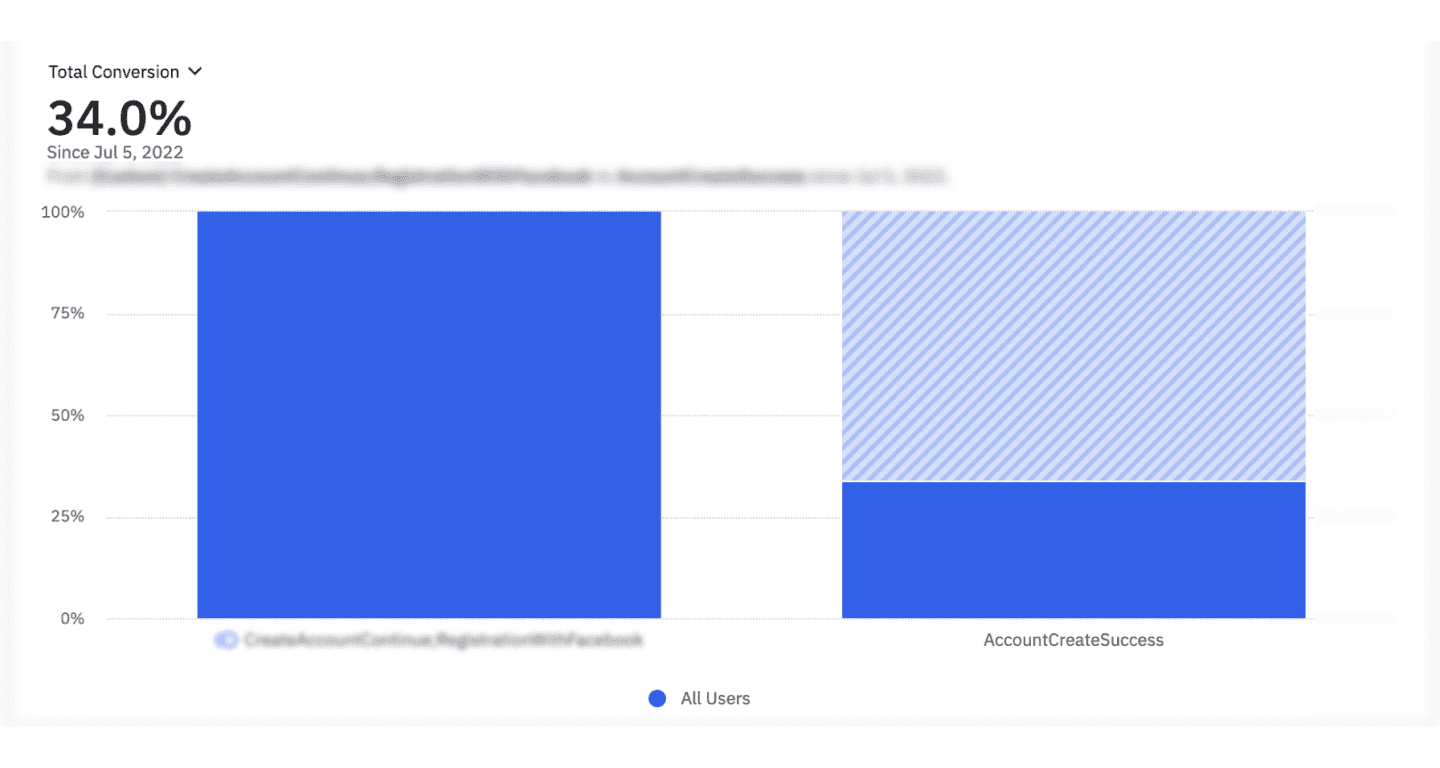
Amplitude, Before
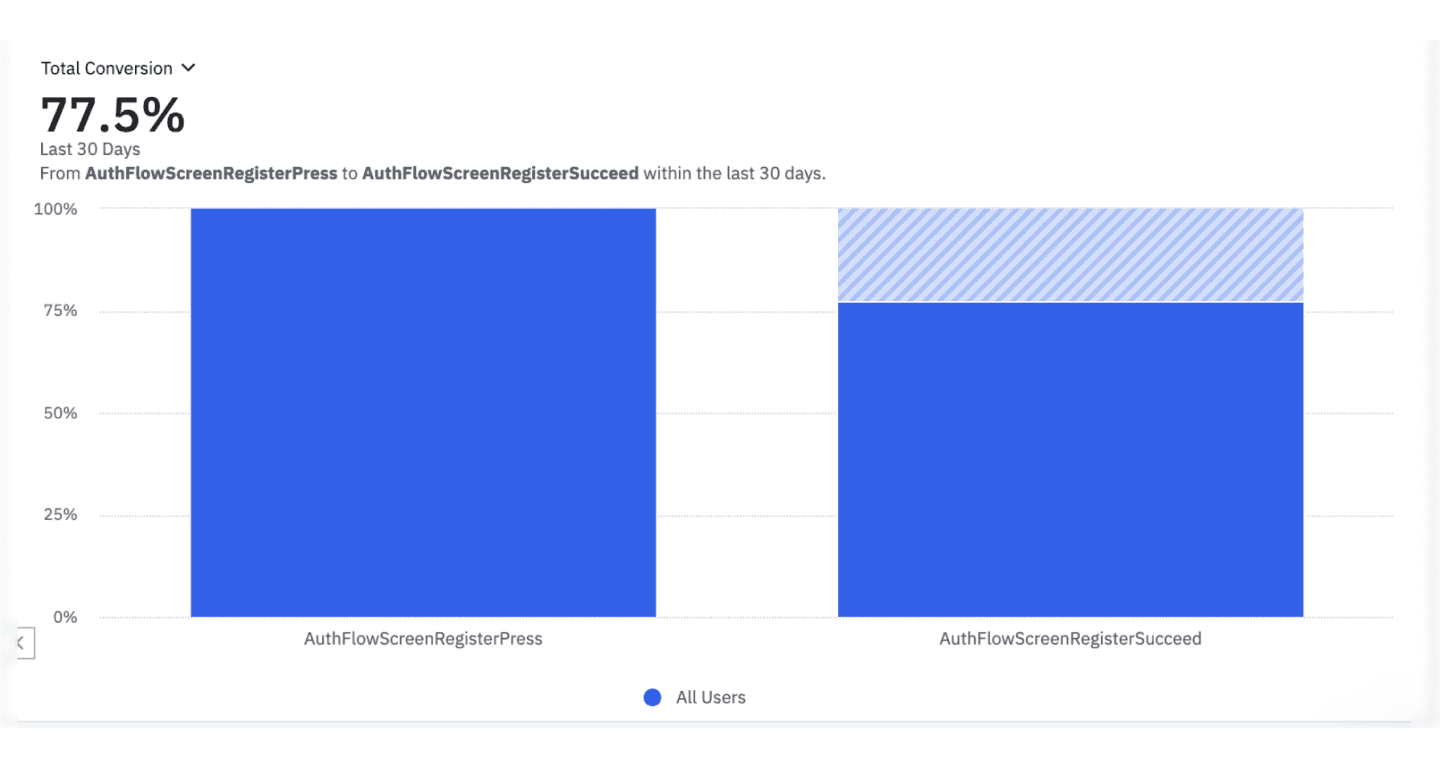
Amplitude, After